
Services / Brand & Identity / Collateral
Sales flyers, business cards, pitch decks, one-pagers, leave-behinds: the everyday assets your team hands out, all looking like they came from the same confident company.
For teams whose pitch deck and business card look like they were made by two different people on two different days.
1 kit one brand, every surface · Pioneer Valley
Brand kit · this quarter
Pioneer Valley Extracts: business cards, decks, and flyers as one coherent kit, held across a 7-year brand.
Print-ready
QR cards
one brand, every surface
Collateral is the brand’s daily wardrobe: the deck in the pitch, the card in the handshake, the flyer on the counter. It’s where most brands quietly fall apart.
We design the full kit so every piece your team hands out looks like it came from the same company that had its act together: because a mismatched deck and card tells a buyer more than you want it to.
We’ve even shipped tech-forward details like QR-code business cards for a couple of clients: small touches that signal the brand thinks about the things most brands don’t.
Including tech-forward options like QR-code cards when the brand calls for it.
The leave-behinds that keep selling after the meeting ends.
Decks that look like the company behind them, not a borrowed template.
Editable files so your team makes new pieces without breaking the brand.
Files your printer can run clean, in the formats they actually need.
Every everyday asset, unmistakably one brand.
Collateral from the Spark portfolio: the leave-behinds, sheets and decks a brand ships week to week.
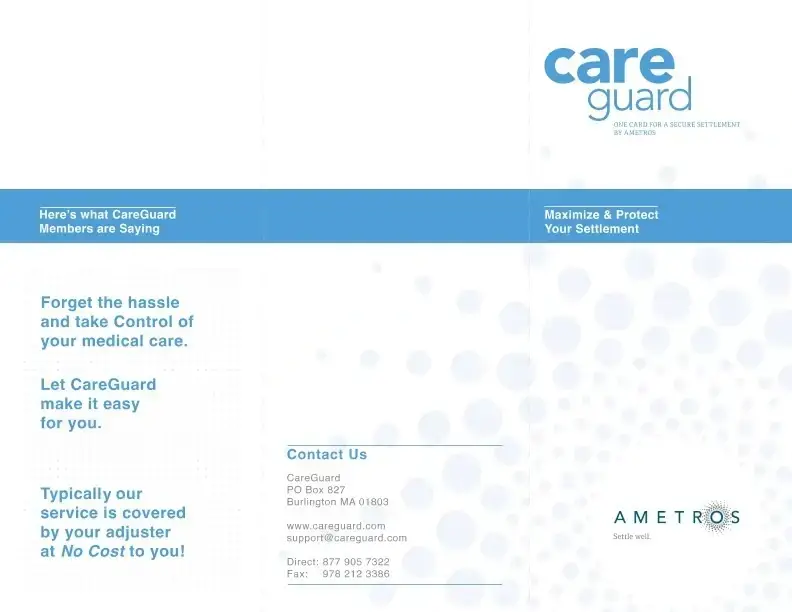
Collateral · trifold leave-behind
A CareGuard leave-behind, built off the brand system so the piece in someone’s hand matches the deck it came from.
See the case study →
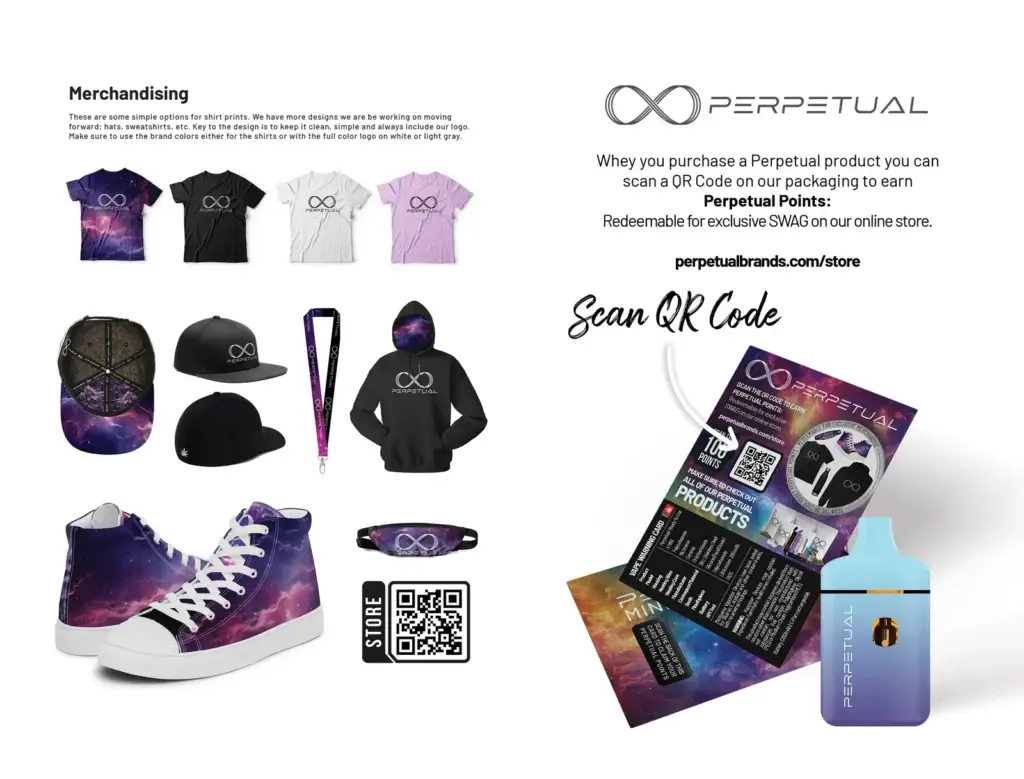
Collateral · merch one-pager
A merchandising one-pager produced inside the brand’s own kit: same type, same color, no one-off design.
See the case study →

Collateral · investor pitch deck
An investor and partner deck built from the brand’s collateral kit rather than designed from scratch.
See the case study →
Thirty minutes with a principal: the person who would run the work, not a salesperson. You leave with a straight answer on which service you need first and which you don’t, and nothing starts until you’ve approved a written scope.
And what’s quietly embarrassing them.
Every piece speaking the same brand.
So the next piece stays on-brand without us.
How the work splits
AI drafts
AI does the first pass
human-finished: the part you feel
AI can lay out a flyer in a click, and it’ll look like a flyer AI laid out in a click. The detail that makes a card or a deck feel considered (the kerning, the paper weight, the one decision that says someone cared) is human, and buyers feel it even when they can’t name it.
a single coherent kit · held across a 7-year brand
“Every piece we hand a customer looks like it came from the same company — and that consistency does real work.”
Founder · Pioneer Valley Extracts
The everyday assets your team hands out: business cards, sales flyers, one-pagers, sell sheets, brochures, pitch and sales decks, and leave-behinds. It is the brand’s daily wardrobe: the deck in the pitch, the card in the handshake, the flyer on the counter. It is also where most brands quietly fall apart, because each piece gets made by a different person on a different day.
Sometimes, and we will tell you when they are not. A QR card works when there is something genuinely worth scanning behind it: a live portfolio, a booking link, a spec sheet that changes. It fails when it replaces the information people actually needed printed, or when the context is formal enough that scanning feels like homework. We have built them for clients where the audience was already comfortable with it.
You can, and it will look like a Canva template: which is precisely the impression you do not want in a pitch against a better-resourced competitor. Collateral is where “looks bigger than you are” is won or lost. The tell is rarely one bad choice; it is default type pairings and stock layouts that a buyer recognizes without being able to name why.
Yes. You get branded, editable templates in the tools your team actually uses, with the brand elements locked and the flexible zones marked. That means new pieces stay on-brand without routing every flyer back through us. It is deliberately a handoff: the goal is that your team ships faster, not that you have to call us for a one-pager.
A sell sheet sells one product: specs, pricing, and the reason to stock it, usually for a buyer or distributor. A one-pager sells the company or the idea, compressed to a single page someone can scan in under a minute. A leave-behind is defined by when it is used, not what is on it: the thing that keeps working after you leave the room. A one-pager or a sell sheet can both be leave-behinds.
Both, and the split is about intent. Collateral covers the branded pitch deck as a brand surface: it should look like the same company as your card and your packaging. Sales Enablement covers decks built to win a specific deal, along with one-pagers, leave-behinds, and sales tools built around a sales motion. If you need one deck that looks right, start here.
Ask what each piece is supposed to cause, then check it. A sell sheet is working if buyers stock the product; a one-pager is working if it gets forwarded internally; a deck is working if it survives the meeting it was left behind from. We also look for the unglamorous signal: which pieces your team has quietly stopped using, because that usually means the piece was never built for the conversation they are actually having.
Thirty minutes with a principal: the person who would run the work, not a salesperson. We look at what you already have and the surfaces where it is breaking, and you leave with a straight answer on which service you need first and which you don’t. If it is a fit, we follow up with a written scope for the work, and nothing starts until you have approved it.
Logo, marks, color, type and the rules that hold them together, so the brand looks like one company across a package, a deck, a storefront and a 320px screen.
Explore the service →
A structured naming ladder, 10 candidates to 5 to 3 to the one, with the trademark and domain reality checked before you fall in love.
Explore the service →
From a one-pager of colors, fonts and logo rules to a full system with voice and tone. Scaled to how complex the brand actually is, not a 90-page PDF nobody opens.
Explore the service →
Packaging that earns the pickup at retail, survives compliance, and prints clean at production: on a shelf you don’t control.
Explore the service →
Architecture before identity. The parent brand sets the equity; each child sub-brand earns its own air without diluting the family.
Explore the service →
