
Services › Retail Merchandising › Digital / TV signage
Digital and TV signage designed for the screens already running in dispensaries and retail (menus, brand spots, promotions) so the most-watched surface in the store is working for you.
For brands that want the screen: the one surface in the store everyone’s already looking at.
85% MA dispensary shelves · Pioneer Valley Extracts
Screen · most-watched
Pioneer Valley Extracts: one brand across every in-store surface, screen included, on 85% of Massachusetts dispensary shelves.
digital menus
brand spots
MA dispensary shelves
Every dispensary has screens, and every shopper in line is staring at one. That screen is the most-watched surface in the store: and most brands cede it to a static menu the store made in an afternoon.
We design the digital signage that earns the screen: menu layouts that move product, brand spots that play between, promotions timed to the moment a shopper’s deciding. Motion, brand, and merchandising on the one surface that already has the room’s attention.
It’s the modern edge of in-store merchandising: print presence carried onto the screen, designed for how people actually watch it: in line, at a glance, on a loop. The screen does the work a budtender can’t repeat a hundred times a day.
Menu layouts built to move product, not just list it: readable from the line, on a loop.
Short brand moments that play between menu cycles and make the screen yours.
Deals and drops timed to the moment a shopper’s deciding, not just looping all day.
Designed for the glance-from-the-line viewing real shoppers actually give it.
The same visual language as your print and shelf presence, carried onto the screen.
Built inside the regulated-industry rules so it runs in-store without a pull.
Two surfaces on the same dispensary floor: the boards over the counter and the wall you see before you reach it.

Dispensary · Over the counter
Digital menu boards over the counter, designed as one system with the product islands beneath them.
THE BUILD · MENU BOARDS AND PRODUCT ISLANDS AS ONE SYSTEM
See the case study →
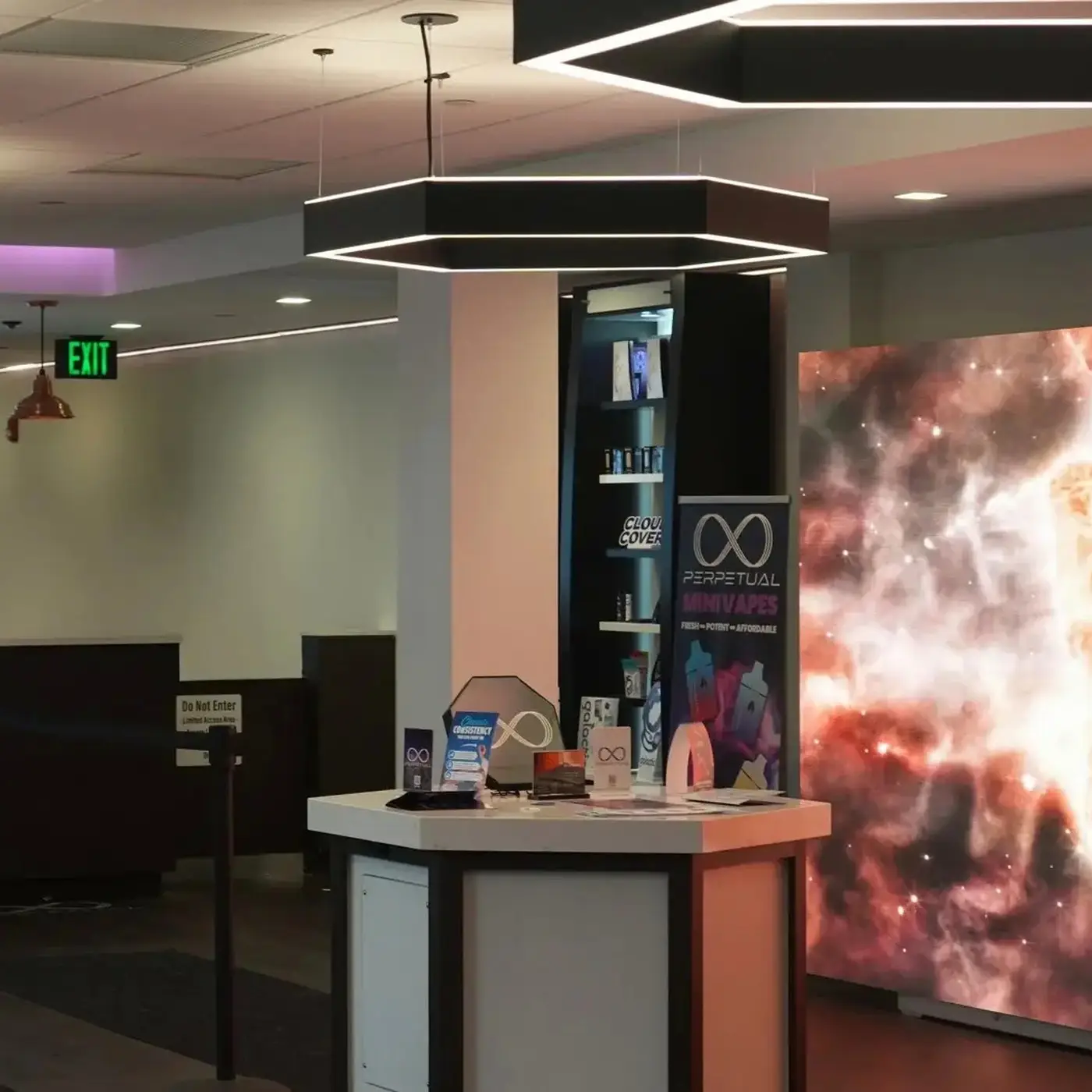
Dispensary · Same floor
The LED media wall on the same floor: brand motion at the scale of a room, not a poster.
THE BUILD · LED MEDIA WALL, BRAND MOTION AT ROOM SCALE
See the case study →
Thirty minutes with a principal: no deck, no pitch. You leave with an honest read on what to do first, whether or not you hire us.
Where it hangs, who’s watching, what they’re deciding.
Menus that move product, spots that play between.
Promotions timed to the moment, content that runs clean inside compliance.
How the work splits
AI drafts
AI does the first pass
human-finished: the part you feel
A screen can loop anything. Knowing what a shopper in line will actually absorb in a four-second glance, and what just becomes wallpaper, is the human read. The screen has the room’s attention; wasting it is the easiest mistake in the store to make.
of Massachusetts dispensaries carry Pioneer Valley Extracts: built on a full in-store presence where every surface, screen included, carries one brand
“We don’t treat the in-store screen as an afterthought. It’s the most-watched spot in the store — Spark designs it like it.”
Founder · Pioneer Valley Extracts
A screen is driven by a media player or a built-in app pulling content from a signage CMS, and the menu portion is usually fed live from the point-of-sale or menu platform the store already runs, so pricing and stock update themselves. What’s fixed is the design layer: the layout, the type hierarchy, and the brand spots that play between menu cycles. That’s the part we build.
No, and usually you shouldn’t. The screens in a dispensary belong to the store, and the opportunity is designing the content that runs on them: the most-watched surface in the room, without the hardware cost or the maintenance burden. What you’re really negotiating for is screen time and layout control, not equipment.
Design for a four-second glance from across a room, usually from a queue. That means far fewer items per screen than a printed menu, type large enough to read at ten feet, high contrast, and one idea per frame. The most common failure is treating the screen like a webpage (dense, small, and built to be scrolled) when it behaves much more like a billboard that changes.
If the store owns the screens, your cost is design and content rather than hardware: that’s the whole point of the model. Budget goes to the initial layout and template system, the motion or brand spots, and whatever cadence you want for promotions and new drops. Costs climb when every promotion is designed from scratch instead of running through a template built for it.
They’re better at some jobs and no better at others. A screen wins on anything that changes (pricing, stock, drops, timed promotions) and on motion, which print can’t do at all. It loses on dwell: a shopper reads a printed menu at their own pace, while a screen moves on without them. Most stores genuinely need both.
Whoever holds the CMS login: typically the store for the live menu, and your side for brand and promotional content. Decide this before launch and write it down. The most common failure we see is a well-designed loop that nobody owns three months later, still running a promotion that ended in the spring.
Screen content is held to the same advertising rules as print, and some states add rules about what may be visible from outside the store, which catches screens specifically. We design the loop inside your state’s rules (which claims can appear, what warning text has to run, how promotional pricing may be shown) so content doesn’t have to be pulled after it’s built.
Thirty minutes with a principal: the person who would run the work, not a salesperson or an account manager. You pick a time and you’re on the calendar; there’s no form-then-wait and no discovery call to qualify you for another call. We spend the first few minutes on what’s got you looking, then you walk us through your situation and we give our read in real time. You leave with an honest opinion on which part of this you should do first and which you can skip: whether or not you hire us.
