
Services › Retail Merchandising › Display walls
Full display walls (designed, built out, and stocked with everything that goes on them) so a section of someone else’s retail floor reads unmistakably as yours.
For brands with the volume or the partnership to own a wall in the stores that sell them.
$20K → $400K brand + in-store growth · Perpetual
In-store build · result
Perpetual: built from a $20K start to $400K, with the in-store brand environment doing load-bearing work in the growth.
brand + dispensary build
brand + in-store growth
A single display competes for the shelf. A display wall owns the room. When a shopper rounds the corner and an entire section reads as one brand, the decision is half-made before they pick anything up.
We do the whole wall: the design, the buildout, and everything that lives on it: shelving, product staging, signage, the brand environment. Not the store’s wall as the store would build it. Your brand’s wall, inside their store, built to convert a passerby into a buyer.
This is the deep end of retail merchandising: physical-space work most digital agencies won’t touch. We’ve built brands from a $20K start to $400K, and the in-store wall is where a lot of that lift gets made.
The full environment (layout, shelving, brand zones) designed as one converting surface, not a grid of products.
Spec, source, and build: the physical wall delivered, not just drawn.
Product staging, signage, graphics, lighting cues: the whole surface, designed together.
A section of someone else’s floor that reads as 100% yours the second a shopper turns the corner.
A wall built so staff can keep it full and correct without it drifting off-brand.
Designed inside the store’s rules and the regulated-industry rules so it goes up and stays up.
Two installed wall builds: one that took over a whole floor, one that carved out two brand bays inside someone else’s shelving.

Perpetual · Brand environment
A full-height wall wrap and wrapped counter run.
THE OUTCOME · $20K → $400K A MONTH, ACROSS THE FULL ENGAGEMENT
See the case study →
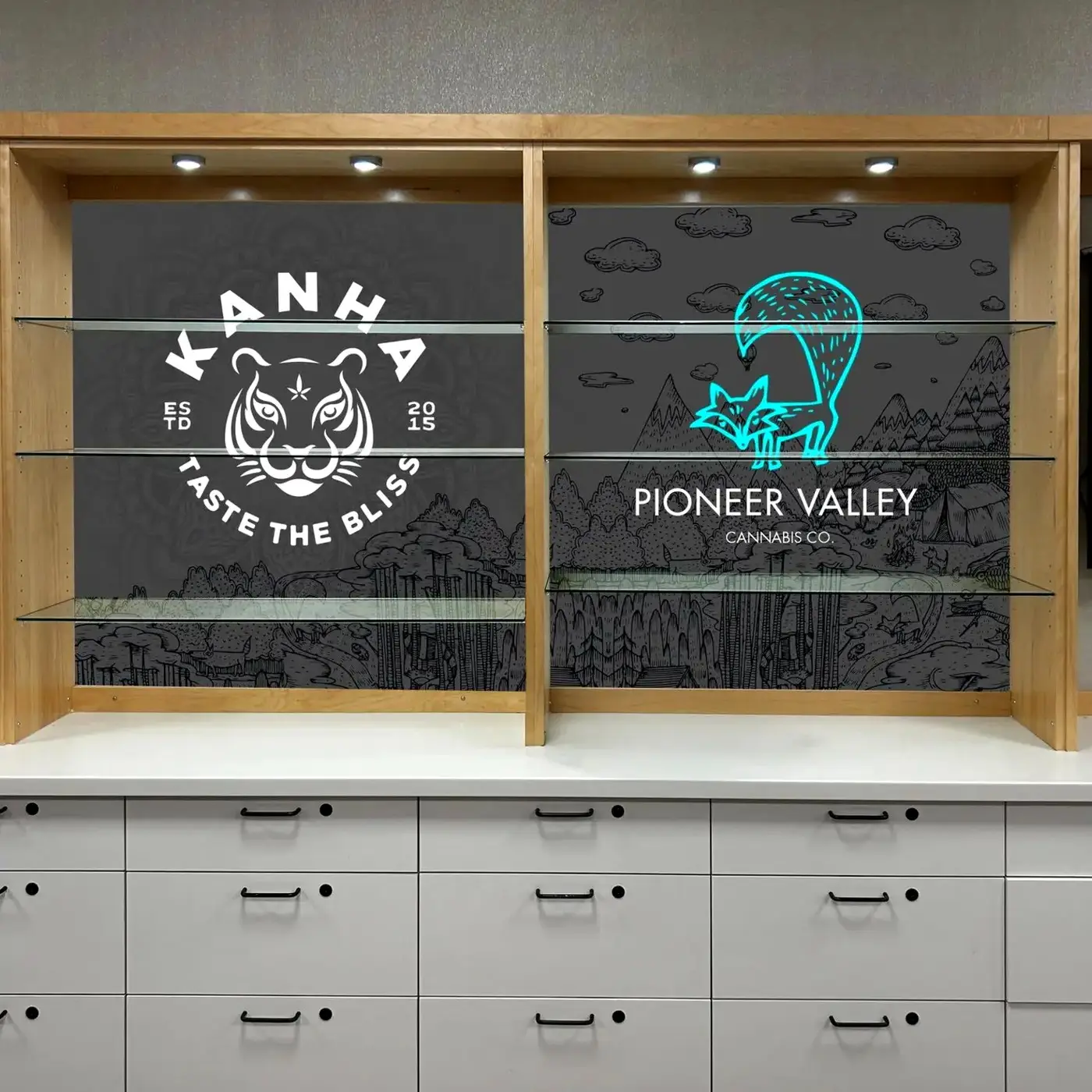
Pioneer Valley · Kanha · Shelf wall
Printed back-panel bays that give two brands their own wall inside shelving they don’t own.
THE OUTCOME · 85% OF MASSACHUSETTS DISPENSARIES CARRY THE BRAND
See the case study →
Thirty minutes with a principal: no deck, no pitch. You leave with an honest read on what to do first, whether or not you hire us.
The corner, the traffic flow, the brands next to you.
Environment, staging, and signage built together.
Fabricated, installed, and specced so the store can keep it full.
How the work splits
AI drafts
AI does the first pass
human-finished: the part you feel
A wall is a thousand small calls: what reads from across the room, what a shopper notices at arm’s length, how it looks half-stocked on a Saturday. We make those calls by standing in the room, not rendering it. That’s why the wall converts instead of just decorates.
Perpetual came to us as a small operation; we built the brand and the dispensary, and the in-store environment was load-bearing in the growth
“We were a $20K idea. The brand and the in-store presence Spark built took us to $400K — people walk in and the space sells for us.”
Owner · Perpetual
A display wall is a full section of a retailer’s floor built as one brand environment: shelving, product staging, signage, graphics, and lighting designed together rather than assembled piece by piece. Where a single display competes for a shelf, a wall owns the room: a shopper rounding the corner reads the entire section as one brand before touching anything.
Both. We design the wall, spec and source the fabrication, and deliver everything that goes on it: installed and stocked, not a concept deck. This is the deepest physical build in the pillar and the one where handing a finished design to someone else loses the most in translation, so we stay on it through installation.
It’s a partnership conversation, not a purchase. Retailers grant wall space to brands that move volume, bring shoppers in, or fund the buildout: often all three. The design supports the ask: a wall that improves the retailer’s own floor, keeps restocking simple for their staff, and fits their rules is far easier to approve than one serving only the brand.
Scale and permanence. An end cap or shelf display is a placement inside the retailer’s fixture system: usually temporary, and governed by their planogram. A wall is a built environment with your fixtures, surfaces, and lighting occupying a defined section of floor under a longer-term agreement. One borrows space for a season; the other holds it.
Store staff, which makes restocking a design problem rather than an afterthought. We build the wall so it can be refilled correctly by someone who has never read your brand guidelines: clear product zones, obvious facings, and graphics that don’t depend on perfect stocking. A wall that drifts off-brand within a month wasn’t designed for the people who actually work it.
Sometimes. Freestanding fixtures, shelving, and graphics usually don’t. Anything touching building systems does: hardwired lighting, wall anchoring under some leases, or anything affecting egress or fire clearance. We flag it during the spec phase and coordinate with the retailer’s facilities contact, because discovering it on installation day costs you a whole reset window.
Thirty minutes with a principal: the person who would run the work, not a salesperson or an account manager. You pick a time and you’re on the calendar; there’s no form-then-wait and no discovery call to qualify you for another call. We spend the first few minutes on what’s got you looking, then you walk us through your situation and we give our read in real time. You leave with an honest opinion on which part of this you should do first and which you can skip: whether or not you hire us.
